Joshua Wong receives 10-year prison term for national security charges
Prominent Hong Kong activist Joshua Wong was sentenced to a decade in prison for conspiring to collude with foreign forces, a verdict that underscores the ongoing crackdown on the city's pro-democracy movement.
By News Media House Staff ·
Prominent Hong Kong activist Joshua Wong was sentenced to 10 years in prison on Thursday for his second conviction under the national security law imposed by Beijing. The ruling marks a significant development in a case that critics argue reflects the continued suppression of the city's once vibrant pro-democracy movement.
Wong, who is 30 years old, was charged in 2025 with conspiracy to collude with foreign forces to endanger national security. In September, he pleaded guilty to the offense, a legal step that typically results in a reduced sentence. He is already serving a separate term of four years and eight months for the city's largest national security case, which was linked to an unofficial primary election.
Prior to this latest prosecution, Wong had been scheduled for release in January 2027. However, Judge William Tam stated during the sentencing hearing that the nature of the new offense was grave. The judge rejected the argument that Wong's role was limited and noted that he initially considered a 13-year sentence before lowering it due to the guilty plea.
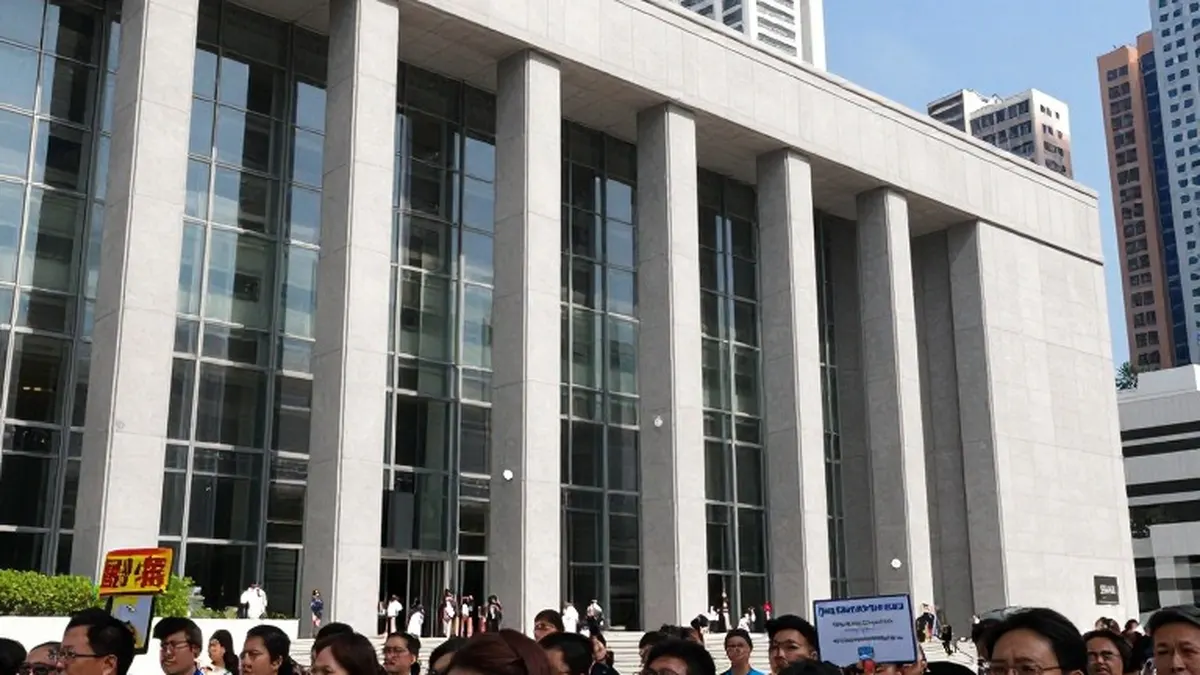
The judge ruled that Wong can serve his two prison sentences concurrently. Since he has only about two months remaining on his previous sentence for the primary election case, this new ruling effectively extends his total time behind bars significantly. Wong appeared calm as he left the court, thanking his supporters who were waving to him. Tiffany Chin, a former member of the now disbanded group Scholarism, was seen in tears during the proceedings.
Supporters expressed deep emotion over the verdict. Resident ET Wong, who knew the activist when he was a teenager, praised his "big-picture thinking." She stated that he walked a difficult path for the sake of Hong Kong's future and human rights, adding that in her heart, he should not have spent a single day in wrongful imprisonment.
Observers suggest that this sentencing demonstrates the authorities' determination to keep prominent activists in custody for extended periods, thereby chilling civic activism. Eric Lai, a research fellow at the Georgetown Center for Asian Law, commented that national security charges can be repeatedly used to keep specific political prisoners in jail if the government deems it necessary. Beijing views Wong as an anti-China figure who supports Hong Kong independence, a position that crosses a major political red line.
The prosecution alleged that Wong and fellow activist Nathan Law agreed around 2016 to lobby internationally for democratic self-determination. They claimed the pair called for sanctions and other adverse measures against Hong Kong and China before the security law was introduced. The case cited meetings with U.S. politicians Nancy Pelosi and Marco Rubio in 2016 and 2019 as evidence of this international lobbying.
After the law was enacted, the prosecution said Law and others advanced their work abroad by meeting foreign politicians and launching petition drives. Wong supported these efforts from within Hong Kong by using foreign media and social media to draw attention to the cause and bolster requests for sanctions or blockades. His lawyer, Derek Chan, had urged the court to impose a sentence that offered some hope, noting that Wong wished to care for his parents after his release.
Friends of the activist noted that during his nearly six years in prison, Wong continued to read, exercise, and learn the guitar, maturing in his thinking along the way. To his supporters, he represents a younger generation born in the final years of British colonial rule before Hong Kong's return to China in 1997.
Despite his incarceration, Wong's influence remains a concern for the pro-Beijing camp. In September, a local newspaper criticized a 2017 documentary about Wong on Netflix for "beautifying" his crimes. The city's security bureau told local media that the government was taking follow-up action, yet the documentary subsequently rose to the top of Netflix's popular chart in Hong Kong.
Originally published by News Media House · Source: NPR
More News · National news · Report a business · Got a Story?