Supreme Court Takes Up Home Distilling Challenge
The justices will weigh whether Congress can bar Americans from making spirits at home under its taxing authority.
By Chloe Wilson ·
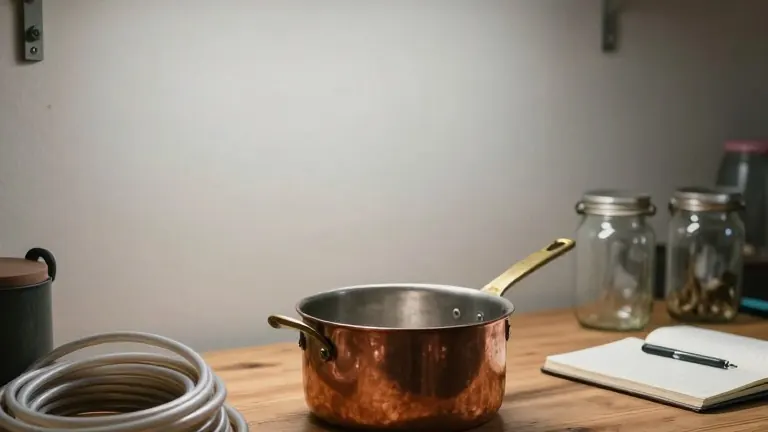
The Supreme Court has agreed to decide whether federal law may bar Americans from distilling spirits in their own homes.
Congress put the prohibition in place in 1868. It defines a distilled spirits plant and forbids locating one in any dwelling place. Violations carry a maximum fine of $10,000 and up to five years in prison.
The Fifth Circuit struck down the provision in April. Judge Edith Jones wrote for the court that the ban operates as "an anti-revenue provision that prevents distilled spirits from coming into existence" and therefore "to reduce revenue instead of raising it." Jones added that the statute cannot stand as an exercise of the taxing power. When Congress levies a tax, she wrote, it "leaves an individual with a lawful choice to do or not do a certain act, so long as he is willing to pay a tax levied on that choice." Would-be home distillers, she noted, "have only the choice not to do as they wish or risk fines and imprisonment."
The government has asked the Supreme Court to reverse that ruling. Its brief argues that imprisoning home distillers is a "necessary and proper" tool against tax evasion, because the agency cannot easily detect spirits made in private homes. Jones rejected that reasoning below, writing that "Congress cannot prohibit intrastate activity solely because it might produce products hard to tax." She added that under such logic "Congress may criminalize nearly any at-home conduct only because it has the possibility of concealing taxable activity. Home-based businesses may be forbidden. Remote work may be deemed a crime."
The dispute began in 2014, when Scott McNutt, a member of the Hobby Distillers Association, received a notice from the Treasury Department. The letter said the department had reason to believe he "may have purchased a still capable of producing alcohol and/or equipment and materials that may be used in the manufacture of a still." It also stated that "federal law provides no exemptions for the production of distilled spirits for personal or family use" and that unlawful production is a criminal offense. The notice put the fine at up to $500,000 and prison time at up to five years, an amount higher than the $10,000 figure in the statute.
McNutt's lawyers write in court filings that he "owns a still that he has used to lawfully distill fuel alcohol and seeks to 'tinker around' with beverage spirits." The second named plaintiff, Thomas Cowdrey, "likewise seeks to experiment in creating new beverage spirits, including 'apple pie vodka,' for which he has developed a recipe."
Federal law has long permitted home production of wine and beer for personal or family use. Online retailers including Amazon sell stills described as appliances for making vodka, gin, brandy and whiskey. The Supreme Court has not yet set a date for oral arguments in the case.
Source: Chicago Sun-Times