AI Texting Agents: West Virginia Candidate Embraces Digital Canvassing
New research indicates chatbots shift voter sentiment more effectively than traditional ads, though privacy concerns and accuracy issues persist.
By Chloe Wilson ·
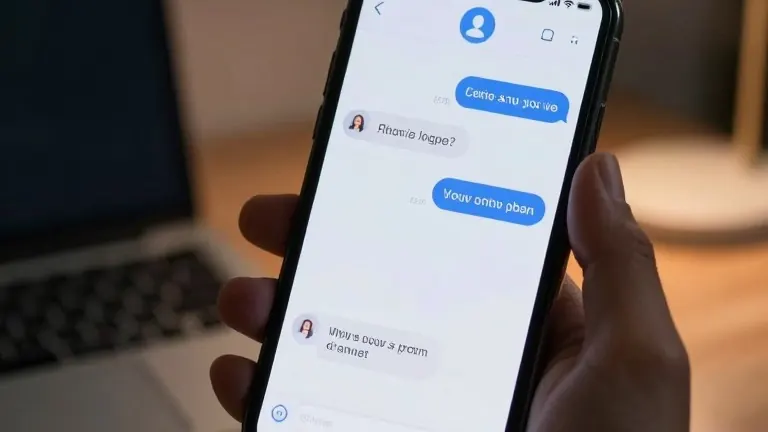
Political campaigns across the United States are integrating artificial intelligence into voter outreach strategies ahead of the November midterm elections. The technology allows campaigns to conduct thousands of text-based conversations daily, a volume that human staff and volunteers cannot match. Democrats and Republicans alike are testing these AI-powered agents to reach voters and gauge their opinions on key issues.
Ace Parsi, a Democratic candidate in West Virginia, is using the technology despite his personal reservations. Parsi, who is running against Republican Rep. Riley Moore, described the decision as the most complicated of his campaign. He told CBS News that the tool allows his team to ensure voters feel seen and listened to. His campaign manager, Monica Biddix, confirmed that the team receives every individual chat, along with summaries and alignment scores for each conversation.
The agents are powered by large language models, the same technology behind ChatGPT and Gemini. Vendors like Convos.ai load these models with campaign-approved materials, including speeches, press releases, and website content. Tom Carroll, founder of Convos.ai, stated that the agents only discuss information provided by the campaign. This approach limits the AI's ability to hallucinate or drift off-topic during a conversation.
Marty Santalucia, a partner at Vector Political, has sent over 3 million text messages this cycle. These messages have resulted in more than 35,000 individual conversations. Santalucia noted that the technology democratizes knowledge of specific districts and precincts. He explained that his firm trains the AI to use deep canvassing techniques, which involve extended, empathetic listening to understand voter concerns.
The system assigns a score from 0 to 100 to each voter based on their engagement. A score of 0 indicates strong opposition, while 100 indicates full support. Campaigns use these scores to determine which voters to contact further. In Parsi's campaign, 23,000 texts were sent, and approximately 400 recipients, or 1.7%, engaged in back-and-forth conversations. Among those who replied, Santalucia said 10% to 20% stayed in the conversation for at least an hour.
Research published in the journal Nature found that these AI conversations can be more effective than political ads. In a U.S. experiment involving 2,306 citizens, pro-Harris chatbots moved Trump supporters nearly 4 points toward Harris on a 100-point scale. This effect was roughly four times larger than the impact of pro-Democratic video ads in previous cycles. David Rand, a professor at Cornell University and an author of the study, noted that the chatbots were more effective than normal ads, though the conversations were longer.
However, a companion study in the journal Science raised concerns about accuracy. The study, which included 42,357 participants in Britain, found that the harder chatbots push, the less accurate their claims become. Privacy experts are also questioning what voters understand about who reads their messages. In most states, there is no requirement to tell voters they are texting with AI, although some campaigns do so voluntarily.
Parsi said his campaign tells voters at the start of each conversation that they are interacting with a chatbot. He said his team follows up with human phone bankers after the digital exchange. Parsi also personally called every voter who expressed concern about the tool. He said he specifically called those who ranked as strongly disagreeing with him, a strategy he believes counters the tendency of elected officials to only speak to supporters.
Jessica Alter, co-founder of Tech for Campaigns, argued that chatbots may reach voters who do not want door-knockers. She said campaigns should listen if voters explicitly prefer texting over in-person interactions. Santalucia described one instance where an AI agent spoke with a woman for 30 to 45 minutes. The woman shared a personal story about her parents' racism, an exchange that might not have happened with a human canvasser. The agent asked why she shared the story, and the woman replied that the agent asked the right questions.
Source: CBS News Detroit
More Business · Bad Service · Report a business · Got a Story?