Idaho Fire Conference Focuses on Data and New Tanker Capabilities
Industry leaders in Boise discussed how flight tracking software and larger aircraft aim to improve wildfire response efficiency.
By Megan Parker ·
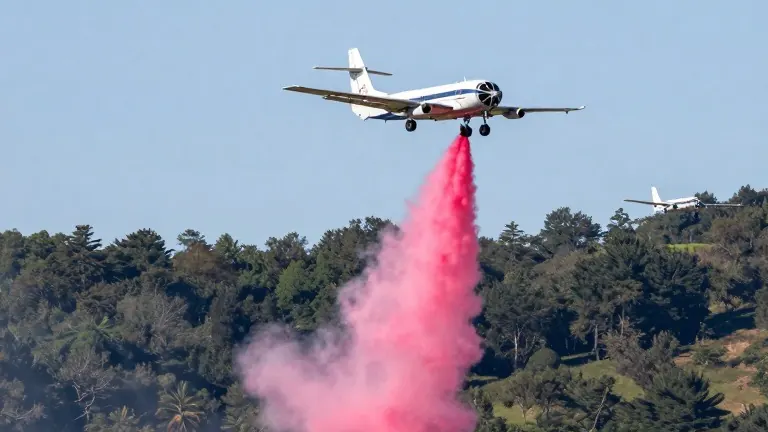
Wildfire suppression in Idaho relies heavily on aircraft, but industry leaders argue current methods have not kept pace with the increasing severity of fires.
Aerial firefighting companies gathered in Boise, Idaho, to share updates on technology and equipment. Todd O'Hara of the New Zealand-based firm TracPlus stated that the sector has used similar tactics for 40 to 50 years. He noted that fires have worsened faster than technology adoption has improved efficiency.
TracPlus manages flight data for approximately 3,500 aircraft globally. The company records specific details such as the volume of retardant dropped and the precise location of each drop. O'Hara explained that the firm is developing a mathematical model to standardize decision-making. The goal is to help new operators make the same effective choices as those with 20 to 30 years of experience.
Chemical formulations are also undergoing changes to enhance visibility and longevity. Jim Karels of Perimeter Solutions described a shift from traditional dark red retardant to a fuchsia pink. He said the new color is easier to see from both the air and the ground and dissipates more quickly after application.
Aircraft capacity is expanding to reduce the number of necessary flight passes. Nic Lynn of Neptune Aviation reported that the company dropped 606,000 gallons of retardant in Idaho this year. He announced that Neptune is developing a new large air tanker capable of carrying 4,500 gallons. This represents a 50% increase over the company's current 146 model.
Lynn said the higher capacity allows crews to establish longer fire lines with fewer trips. The company is also converting an Airbus A319 into a firefighting plane to further increase its operational capabilities.
Source: KIVI-TV