NY Voters Weigh Senate Stakes Amid Governor Race
Westchester residents cast ballots for the state's open governorship while the nation fights for control of the U.S. Senate.
By Chloe Wilson ·
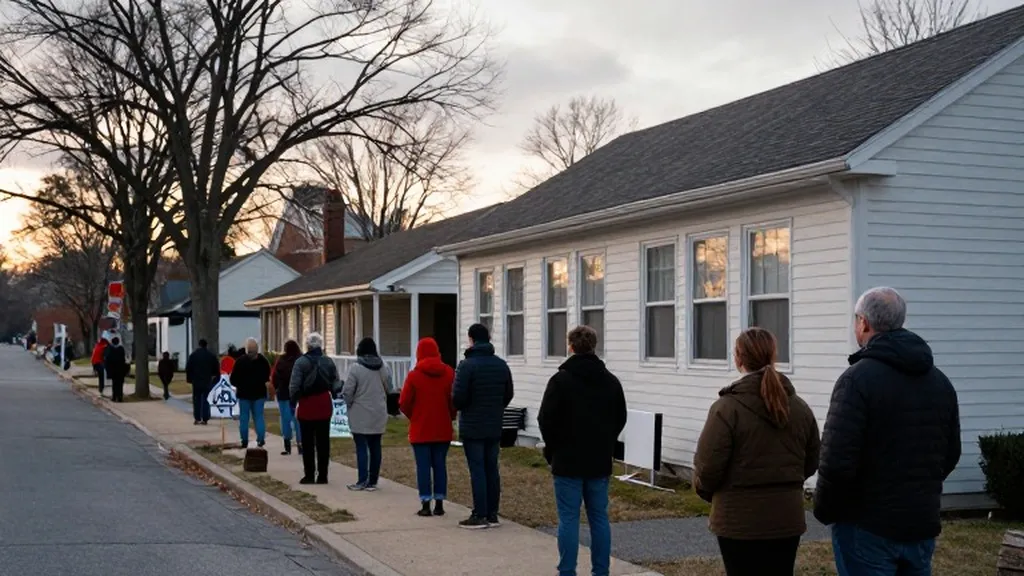
Polls across Westchester County opened at 6 a.m. on Tuesday, November 3, 2026, as residents in Yonkers, New Rochelle, Mount Vernon, and White Plains headed to the polls for the midterm elections. According to Ballotpedia, New York voters will remain at the polls until 9 p.m. local time. The date marks the halfway point in President Donald Trump’s second term, meaning the results will determine which party controls Congress for the remainder of his presidency. While the national spotlight often focuses on federal races, the ballot in New York features a critical open seat for governor, as no incumbent is running for the office this year.
For Westchester County voters, the state’s executive race is a primary component of the ballot. The state has an open governorship with both Democratic and Republican candidates on the ballot. This contest is part of a broader national trend where 36 governorships are up for grabs. According to the Associated Press, Republicans currently hold 26 governor’s offices, while Democrats hold 24. Because 19 of these races do not feature an incumbent, the outcome of these local contests could shift the nationwide balance of power in statehouses. In New York, the absence of an incumbent allows for a fresh debate on state policy, separate from the national presidential narrative.
Although New York does not have a U.S. Senate election on its own ballot this year, the state’s voters are part of the national electorate that will decide the composition of the upper chamber. Ballotpedia reports that 35 of the 100 Senate seats are up for election, including 33 regular races and two special elections. Republicans currently hold 53 seats, while Democrats hold 45, with two independents who caucus with the Democrats. For Democrats to gain a majority in the Senate, they need a net gain of four seats. Conversely, Republicans can afford to lose only two seats to maintain their current hold on the chamber.
The Associated Press describes the 2026 election as a referendum on the Trump administration’s first two years. A recent AP-NORC poll indicates that 35% of U.S. adults approve of the president’s job performance, while only 25% approve of his handling of the economy. Approximately seven in ten Americans say the country is heading in the wrong direction. In Westchester, these national sentiments may influence how voters approach their local state and federal ballots, particularly regarding the cost of living and economic management.
The race for the U.S. House of Representatives is equally intense, with all 435 seats up for grabs. Republicans hold 218 seats, and Democrats hold 214. Democrats need to gain a net of three districts to secure a majority, while Republicans can lose no more than two seats to keep their control. In New York, every U.S. House seat is on the ballot. Ballotpedia identifies 46 battleground districts nationwide, with 25 currently held by Democrats and 21 by Republicans. The outcome of these races will determine the balance of power in the lower chamber for the next two years.
Voter turnout has been a significant factor in early voting, with more than 57 million people having already cast their ballots as of Monday. This figure surpasses the early vote totals from four years ago in many closely watched states. The U.S. Postal Service has added extra staff and special lines to ensure that mail-in ballots are counted on time. In New York, polls are open from 6 a.m. to 9 p.m., and anyone in line when the polls close is entitled to vote. Voters in Westchester are encouraged to verify their specific polling place and identification requirements at vote.gov or their local election office.
The Associated Press notes that the 2026 elections are likely to be the most expensive in history. Republican committees have outraised and outspent their Democratic counterparts at the committee level, aided by Trump-affiliated groups. However, at the individual candidate level, Democrats have managed to outraise their opponents. This financial disparity reflects the high stakes of the election, where control of either chamber could lead to significant investigations and oversight proceedings. House Democratic Leader Hakeem Jeffries, who is also running for re-election in New York, has outlined a 100-day agenda focused on the cost of living if his party gains control.
In the U.S. Senate, several key battlegrounds are determining the final balance of power. Races in Georgia, Maine, and Michigan are rated as toss-ups or leans by various political analysts. In Georgia, Senator Jon Ossoff is facing a challenge from Republican Representative Mike Collins. In Maine, Senator Susan Collins is competing against Democratic former state Senate President Troy Jackson. The Associated Press highlights that economic strain and tariffs have made Maine a particularly competitive state. These races, along with contests in Iowa, Kansas, and North Carolina, will dictate whether Democrats can achieve the four-seat gain necessary for a majority.
The mood among voters is marked by a mix of anger and optimism. DCCC Chair Rep. Suzan DelBene stated that the American people are angry and want change. In contrast, RNC Chairman Joe Gruters emphasized the importance of turnout, noting that if Republicans turn out their voters, they will win. President Trump held dozens of rallies in the lead-up to the election, ending his schedule on Sunday in Salina, Kansas, where he urged voters to pretend he was on the ballot. These efforts highlight the intense campaigning that has characterized this midterm cycle.
As polls open in Westchester, voters are making decisions that will shape the political landscape for the next two years. The combination of the open governorship in New York and the high stakes of the federal races creates a complex voting environment. Voters in towns like White Plains and Yonkers are weighing local state issues against the national trajectory of the country. With polls open until 9 p.m., the final outcome of these contests remains undecided, leaving the future of both state and federal leadership in the hands of the electorate.