Pakistan's Diplomatic Gambit: Midterm Elections
Islamabad has cultivated a rare alliance with the White House that may face a shift in power dynamics on November 3.
By Julian Reed ·
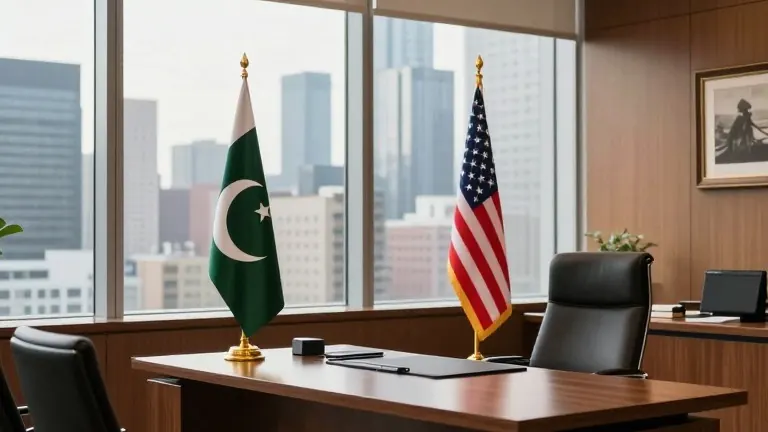
For officials in Islamabad, the November 3 US midterm elections represent a direct test of a diplomatic strategy that has defied recent history. The relationship between Pakistan and Washington has warmed sharply under President Donald Trump, a development that stands in contrast to the strain in ties with traditional allies facing sweeping tariffs and the fallout from the Iran war.
The shift began in March 2025, when Trump thanked Pakistan for helping arrest a suspect in the 2021 Kabul airport bombing. The momentum accelerated in May following a four-day conflict with India, which ended in a ceasefire on May 10. While India attributes the end of hostilities to bilateral talks, Pakistan credited Trump with mediating the peace.
Since that spring, the alliance has deepened. Trump hosted Pakistan’s Field Marshal Asim Munir for lunch at the White House, referring to him as his favorite field marshal. A trade agreement signed in July reduced US tariffs on Pakistani goods from 29 percent to 19 percent, paving the way for new deals in minerals, cryptocurrency, and drones. Pakistan also nominated the President for the Nobel Peace Prize.
Pakistan has also positioned itself as a mediator in the Middle East. After US and Israeli strikes on Iran in February, Islamabad brokered a ceasefire on April 8 and hosted high-level talks between the rivals. The resulting 14-point memorandum of understanding was signed in June, but the 60-day window for further negotiations expired in mid-August without an extension. A recent visit by Munir to Tehran on October 20 yielded no new breakthrough.
The political outlook in Washington has changed. A Pew Research Center survey conducted from September 28 to October 4 places Trump’s approval rating at 30 percent, a drop from 37 percent in January. Imran Khan, a geopolitical analyst and former US Institute of Peace official, noted that a Democratic majority in both chambers would likely prioritize treaty alliances and lean toward India over Pakistan.
Analysts suggest the outcome depends on how Islamabad maintains its relevance. Qamar Cheema of the Sanober Institute argued that Pakistan’s strength lies in its role in the Middle East and its protection of US interests, rather than its dependence on any single leader. Khan observed that while a weaker Trump might alter the short-term dynamic, Pakistan’s elevated global profile and defense relevance in West Asia are likely to persist regardless of the election result.
Source: Al Jazeera
More Politics · World news · Report a business · Got a Story?