
Detroit Three Forecast $2 Billion in Added Material and Logistics Costs This Year
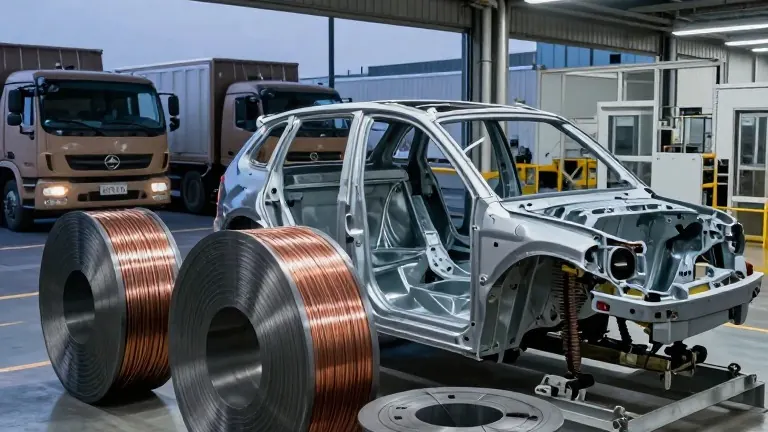
General Motors and Ford each expect added commodity, chip and shipping expenses to reach about $2 billion in 2026 as steel, copper and diesel prices climb.
By Chloe Wilson ·
Car shoppers are still buying, and still paying near-record prices, while the companies that build the cars warn that producing them is getting more costly. The average new vehicle transaction price sat just over $50,000 in September, close to a record high, according to Kelley Blue Book. Buyers are leaning toward higher trims and larger vehicles, which carry wider margins for manufacturers.
General Motors, Ford and Stellantis each posted higher revenue for the third quarter compared with a year earlier. GM revenue rose 2.9%, Ford rose 2%, and Stellantis rose 1%. Sales of larger vehicles moved up as well: GM light-duty truck sales grew 9% over the past year, and Stellantis pickup sales in the United States increased 34%. Ford's F-Series remained a top seller for the company.
The cost side looks different. GM told investors that materials including computer chips and diesel could cost the company as much as $2 billion this year, and that it still expects roughly $2.5 billion in tariff expenses, a figure lowered in part by tariff refunds. Ford CEO Jim Farley said on the company's earnings call that commodities, memory and logistics costs represent "a year-over-year headwind of about $2 billion at Ford."
Steel, copper and computer memory chips have all grown more expensive. Tariffs on imported steel, aluminum and copper imposed since 2025 feed into those prices. Copper faces additional pressure from global demand tied to electric vehicle batteries and data centers, while memory chip supply stays tight across industries including artificial intelligence. Diesel adds another layer: the average gallon price has hovered around $6.35, just below its September all-time high, according to AAA.
Shipping parts between the United States and Canada, where auto supply chains are tightly linked, costs more when fuel rises and when tariffs apply to Canadian goods. "Higher fuel prices are impacting our freight and energy costs," Ford CFO Sherry Ann House said on an investor call, adding that the company has not yet seen the increase affect demand for trucks and fleet vehicles. GM CFO Paul Jacobson said that if materials stay at current prices, "it makes that more challenging heading into next year." Stellantis CEO Antonio Filosa called higher memory chip and raw material prices "an industry-wide phenomenon to work with." Stellantis executives said they would detail those costs in the fourth quarter.
One year has passed since the $7,500 federal EV tax credit ended on Sept. 30, 2025, after Congress removed it in the One Big Beautiful Bill Act. Data from Edmunds and Cox Automotive shows EV sales dropped nationally after the credit disappeared, then leveled off. EVs accounted for about 6% of new car sales in the United States as of September, according to Edmunds. GM's overall third-quarter sales fell 6% from a year earlier, which Jacobson linked in part to a smaller EV market. Tesla's global sales declined during the quarter compared with the same period last year.
Hybrids have moved the other way. Edmunds reports hybrid sales up 27% over the past year. Mike Wall, an analyst at Mobility Global, said some automakers are adjusting product plans toward hybrids, while noting that gas-powered vehicles still generate the profits for large manufacturers. Sam Fiorani, a vice president at Auto Forecast Solutions, said the industry "moves at a glacial pace between generations, between vehicles, between plants," and that tariffs and cross-border disruptions throw off supply chain calculations. He expects the Detroit Three to offer more hybrids in coming years.
Tesla's position in electric vehicles has strengthened as other manufacturers pull back. The company's third-quarter revenue came in roughly flat from a year earlier, but its share of the U.S. electric market grew to almost 52% of new EV sales, according to Edmunds. Ivan Drury, Edmunds' director of industry insights, wrote that "Tesla is like the Kleenex of EVs," and that many buyers default to it regardless of other offerings. On Tesla's earnings call, Elon Musk discussed robotaxis and humanoid robots, with capital spending this year nearly double the level from the same point last year. On a SpaceX call, Musk said special committees at both companies were discussing a possible merger. "Do I think it would be a good idea? Yes," he told investors, adding that shareholders would have to be supportive.
Over 30% of new cars sold in Europe last year were electric, and more than half in China, according to the International Energy Agency. U.S. EV demand has not matched those levels. Sherry Ann House said customers "have been resilient amid higher fuel prices, interest rates and inflation."
Source: WBAA
More Business · Bad Service · Report a business · Got a Story?