47% cut looms for Arizona water
New federal plans threaten to slash allocations for the Central Arizona Project, a system whose designers warned of shortages in the 1960s.
By Chloe Wilson ·
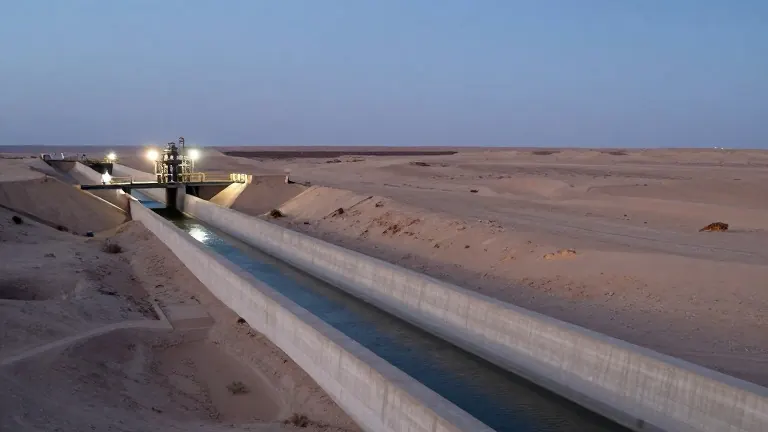
A potential 47% reduction in water allocated to the Central Arizona Project stands as the central threat in a new federal plan to cut usage from the Colorado River. This drastic proposal would reduce the annual take for the canal system that supplies Phoenix and Tucson. The plan has triggered legal action from Nevada, Arizona, and the canal operators this fall. It follows a period where policymakers failed to agree on a regionwide compromise to rein in demand.
The Central Arizona Project, or CAP, is a 336-mile network of canals, pipelines, and pumping plants. It was designed to move water through the desert to support the region's growth. Rich Weissinger, a former director of field maintenance for CAP, described the system as an engineering marvel. He noted that the facility's motors and turbines operate with a steady, thundering whir. Weissinger emphasized that many municipalities and industries depend on the stable water source the project provides.
The current crisis is driven by record-breaking drought and climate change, which have shrunk the nation's two largest reservoirs to record lows. However, the risk of reduced flows was not a modern discovery. In the 1960s, the architects of the CAP explicitly warned that the system would not work forever without additional help. They predicted significant drops in available water for the canal in the 21st century. Their solution was augmentation, or adding outside water supplies to the river.
Proposed fixes at the time included a connection between the Colorado River system and the Columbia River in the Pacific Northwest, or the construction of massive desalination facilities on the Pacific Coast. These ideas never became reality. Floyd Dominy, then commissioner of the Bureau of Reclamation, forecasted that available supplies for the CAP would be more than halved between 1990 and 2030. He attributed these declines to growing use in upstream states like Colorado, New Mexico, Utah, and Wyoming.
Congressman Mo Udall, a Democrat from Arizona and vocal supporter of the CAP, testified before Congress in 1968 that additional water was necessary. He stated that he was sure there would be augmentation. Senators from the Pacific Northwest initially resisted the idea of moving water to the Colorado, leading to a provision in the legislation that barred the federal government from studying such a plan for ten years after the law passed. Despite this early certainty, the promised infrastructure was never built.
Tom McCann, a former deputy general manager for the CAP, said the warnings were largely forgotten because there was no willingness to spend money on a future problem. He noted that cost and political hurdles prevented the implementation of augmentation plans. Today, Brad Udall, a senior water and climate research scientist at Colorado State University and the son of Mo Udall, believes his father and uncle Stewart Udall could have done better than suggesting complicated, expensive fixes. He argued that the era's optimism led them to believe they could engineer their way out of every crisis.
Brad Udall described the 1968 mindset as one where the nation felt smart and rich, viewing the world as its oyster. He said the proponents of the canal just wanted to get the project across the line after a years-long legal battle between Arizona and California. Chuck Podolak, former director of the Water Infrastructure Finance Authority of Arizona, suggested that promising augmentation allowed policymakers to avoid addressing the impact of urban growth on agriculture. Farms and ranches currently account for roughly three quarters of all Colorado River water use. The new federal plan now forces a confrontation with that reality.
Source: WPGH? WPXI? WESA