
Iran Cites 3 Disputed Islands in Sharp Critique of Canada's Gulf Stance
The Iranian Foreign Ministry argues Canada is contradicting its own sovereignty principles by backing the UAE's claim to Abu Musa and the Tunb islands.
By Megan Parker ·
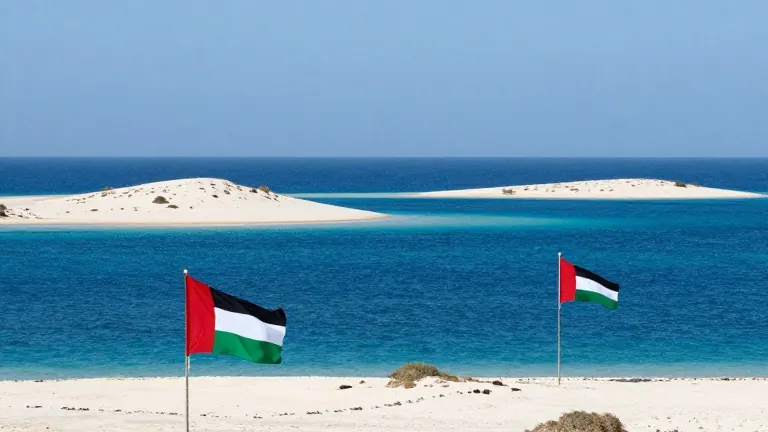
Iran's Foreign Ministry spokesman Esmaeil Baqaei criticized Canada for supporting the United Arab Emirates' claim to three islands in the Persian Gulf on October 31, 2026. Baqaei posted a detailed rebuttal on X, questioning why Ottawa would back what he described as a fabricated dispute. He argued that the move undermines the principles of territorial integrity that Canada has historically defended against its southern neighbor.
The controversy centers on Abu Musa, Greater Tunb, and Lesser Tunb. Baqaei stated that these territories have been part of Iran for millennia, long before the UAE was established in 1971. He cited historical records and geographical evidence to assert that the islands belong to Iran, while noting that the UAE's claim contradicts these documented facts. The UAE, a federation formed in 1971, maintains its position despite the age of the Iranian claim.
Baqaei directed his comments at Canada's Prime Minister, accusing the leader of echoing an absurd claim. He suggested that Canada's support amounts to dangerous adventurism in regional affairs. The spokesman emphasized that Canada should be particularly sensitive to territorial disputes given its own complex history with the United States. He listed specific historical events to illustrate this point, including the American invasion during the War of 1812 and the Montreal Annexation Manifesto of 1849.
More recently, Baqaei referenced remarks by US President Donald Trump regarding the possibility of Canada becoming the 51st US state. He used these comments to frame Canada's current diplomatic stance as inconsistent. By siding with the UAE, he argued, Canada is effectively sawing off the branch on which it sits. The spokesman posed a direct question about whether respect for historical and legal facts is a fundamental principle for Ottawa or only applies when its own sovereignty is at stake.
The statement serves as a public response to recent diplomatic signals from Canada regarding the status of the Gulf islands. Baqaei’s post highlights the tension between historical ownership claims and modern geopolitical alignments. The dispute remains a point of friction between Tehran and Abu Dhabi, with Canada now positioned as a supporter of the UAE’s position. Baqaei’s critique aims to pressure Ottawa by appealing to its national identity and historical memory of external threats.
Source: Middle East Eye