Over 750 residents escape Russian-held Oleshky as six-day truce holds
Ukrainian authorities kept the border crossing secret to protect those remaining in the city, while the White House credits First Lady Melania Trump with helping secure the agreement.
By Megan Parker ·
More than 750 civilians have left the Russian-occupied city of Oleshky, a figure cited by U.S. First Lady Melania Trump in a social media post on Friday. The residents are among the estimated 2,000 people who remained in the city on the Dnipro River before a localized ceasefire took effect.
The humanitarian mission began at 3 a.m. Tuesday and is scheduled to continue through Sunday evening. Ukrainian authorities imposed strict restrictions on the evacuation, refusing to disclose the specific location of the border crossing or the exact number of evacuees. Organizers stated these measures were necessary to safeguard residents who chose to stay in Oleshky and to ensure the safety of future operations.
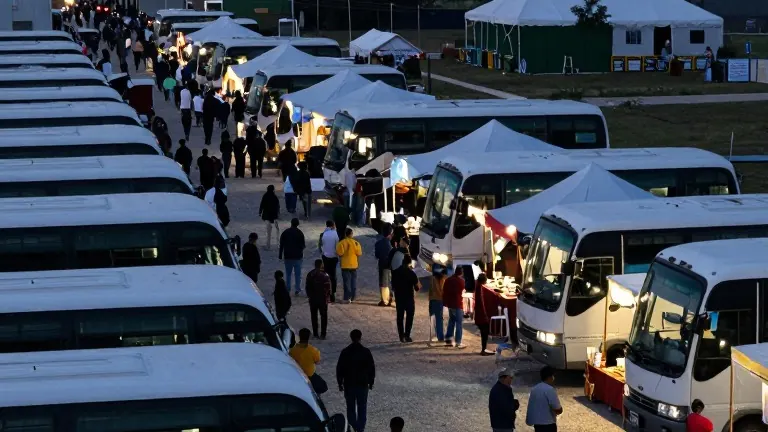
The journey out of the war zone was a long logistical operation. Buses transported the civilians through Russia and into Belarus, where they boarded planes for the final leg of the trip. Russia's Ministry of Defense said those traveling to Ukrainian-controlled land were taken to the Russian city of Anapa and then flown to the Belarusian city of Homel. Dmytro Lubinets, Ukraine's commissioner for human rights, accompanied the group. In a video posted from Homel airport, Lubinets said, "We will be home soon!"
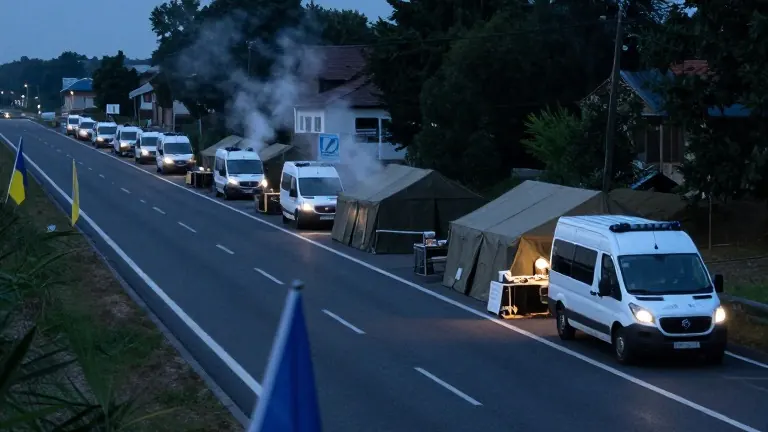
Ukrainian lawmaker Davyd Arakhamia stated that four planes carrying the evacuees had landed in Belarus and that passengers would enter Ukrainian territory within hours. Relatives gathered at the border on Saturday to await their loved ones. The scene included aid tents, coffee stands, and volunteers from the Red Cross, Doctors Without Borders, and the World Central Kitchen.
Liza Paliy, 19, waited at the border hoping to reunite with her father, whom she had not seen in more than two years. Her family fled the occupied territory early in the conflict, while he stayed behind. "We thought at that time that it would be a month, two maximum, and we would return, but unfortunately, two years have already passed," Paliy said.
Daria Pavlyn also waited for her father, Mykhailo, whom she had not heard from in about a month. He had planned to leave with the family after a nearby strike killed two neighbors but stayed behind when arrangements to care for their home and animals fell through. "We realized that, well, there was no [other] way, and he walked us to the road and that was it," Pavlyn said. She noted that he had feared the difficult journey, particularly without Russian documents.
Yana Lantratova, Russia's ombudsperson, confirmed that buses also carried residents who chose to remain in Russian-controlled territory. Russian media showed civilians arriving at a temporary site in Simferopol on the Crimean peninsula, which Moscow annexed in 2014.
The ceasefire was brokered with the help of Melania Trump and Pope Leo, the first American pope, who both pressed the warring leaders to allow aid and evacuations. While the truce held in Oleshky, fighting continued elsewhere. Zelenskyy said Russian forces shot down 433 Ukrainian drones overnight and targeted energy infrastructure, leaving 280,000 households in the Dnipro and Kyiv regions without power.
In a separate development, the Trump administration approved a $2.1 billion sale of 500 PAC-3 Patriot interceptors for Ukraine. The State Department said the missiles would be purchased with donations from Canada, Germany, and Norway, with no U.S. funds involved. Zelenskyy welcomed the approval but urged partners to supply weapons from existing stocks, warning that the new sale could take years to deliver.
Source: CBC News